Complete Guide to Hokkaido Transportation
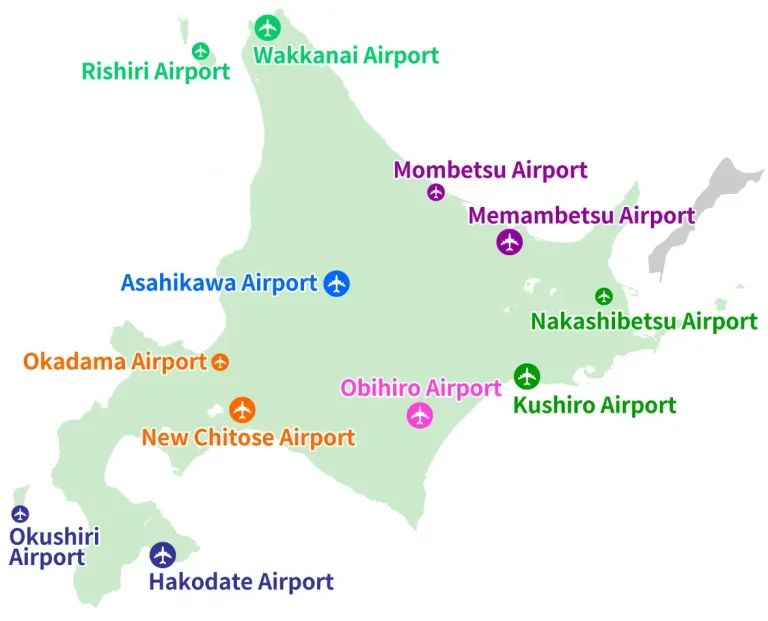
The most common inquiry for Hokkaido tourism is “transportation options.” To efficiently enjoy this vast land, understanding the transportation system is crucial. Access to Hokkaido is primarily by airplane, with 12 airports within the prefecture. Nine of these airports offer direct connections to Tokyo Haneda, and five offer direct connections to Sapporo, making Haneda or Sapporo ideal starting points to save time. Direct bus routes connect airports to major bus terminals, with intercity express buses and local route buses serving as the backbone for sightseeing travel.
Furthermore, combining JR limited express trains, sightseeing trains, ferry connections to Honshu, flexible travel via rental cars, and short-distance travel by taxi makes traveling in Hokkaido even more convenient and enjoyable.
Complete Guide to Hokkaido Transportation / Contents
Airports and Surrounding Sightseeing Areas
New Chitose Airport / Okadama Airport Area
Hakodate Airport and Okushiri Airport Area
Wakkanai Airport and Rishiri Airport Area
Asahikawa Airport Area
Memambetsu Airport and Mombetsu Airport Area
Kushiro Airport and Nakashibetsu Airport Area
Obihiro Airport Area
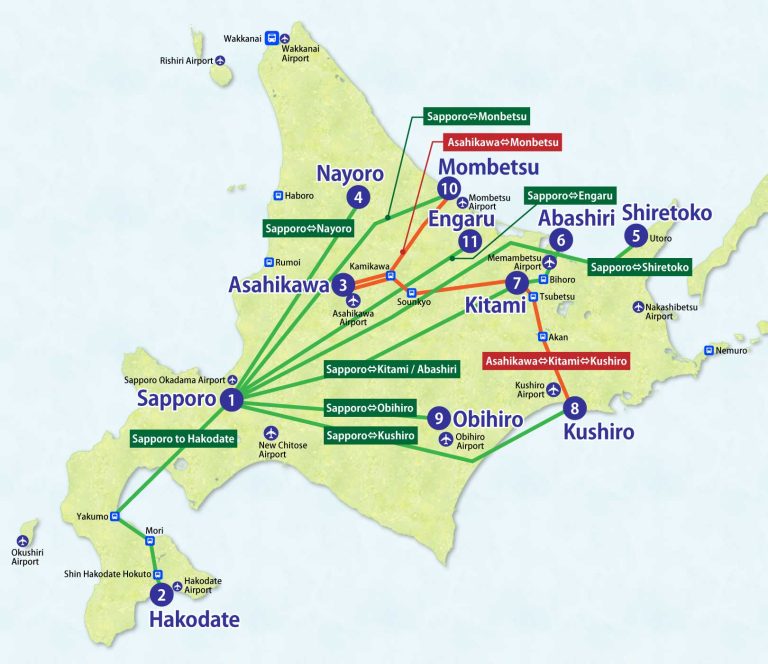
Travel by Intercity and Airport Buses
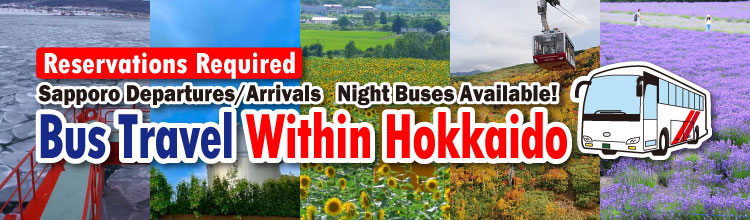
When traveling in Hokkaido, be sure to check the intercity express buses that connect cities and the airport shuttle buses. Some routes require advance reservations (see details). From major bus terminals, local buses take you close to sightseeing spots, allowing you to enjoy the scenery and local atmosphere.
Hokkaido Bus Operators
Travel by Car
Hokkaido covers about 22% of Japan’s land area, with a perimeter of roughly 3,000 km and spans 500 km north to south and east to west—so plan your route carefully. Rental cars are popular for their flexibility in stops and route changes. Don’t forget snow safety in winter.
Travel by Public Transportation
Exploring Hokkaido by public transport is safe, comfortable, and scenic. With JR trains, intercity buses, and subways, you can efficiently reach major cities and tourist spots. A relaxing way to make the journey part of the experience.
Travel by Ferry
Enjoy a relaxing journey from Honshu to Hokkaido via multiple ferry routes, such as Aomori–Hakodate and Hachinohe–Tomakomai. Regular ferries also connect remote islands like Rishiri, Rebun, and Okushiri, offering stunning nature and unique island culture. It’s truly a fun way to travel.
Travel from major cities
Knowing transportation options from major cities is essential for efficient travel in Hokkaido. This guide covers departures and arrivals from five key cities: Sapporo, Hakodate, Asahikawa, Kushiro, and Shari (Shiretoko).
Also, be sure to check Minami-Chitose Station, Kamikawa Bus Terminal, and Furano. These will expand your travel options. Consider how to spend time between departure times. Use Yuyu Hokkaido for checking information during your travels.
Departing from Sapporo
Asahikawa, Engaru, Kitami, Abashiri, Shari, Utoro (Shiretoko), Otaru, Niseko, Toya, Noboribetsu, Shin-Hokuto, Hakodate, Furano, Chitose, New Chitose Airport, Tomakomai, Hidaka, Rumoi, Haboro, Wakkanai
*Day-trip sightseeing buses departing from and returning to Sapporo are available. *Streetcar *Subway (3 lines) *Reservations are recommended for services marked in red.
Departing from Asahikawa
Sapporo, Rumoi, Nayoro, Wakkanai, Kamikawa, Kitami, Monbetsu, Abashiri, Obihiro, Lake Akan, Kushiro, Biei, Furano, Asahikawa Airport
Departing Hakodate
Sapporo, Shin-Hokuto, Esashi, Onuma, Nanae, Shikabe, Kikonai, Matsumae, Osamabe, Hakodate Airport
*Isaribi Railway *Streetcars available *Red text indicates advance reservations are recommended.
Departing Kushiro
Sapporo, Asahikawa, Lake Akan, Nakashibetsu Airport, Rausu, Nemuro, Kushiro Airport, Mashū, Kawayū, Shari, Abashiri
*There is no direct route from Lake Akan to Mashu. / *Day-trip sightseeing buses departing/returning to Kushiro cross from Lake Akan to Mashu. / *Reservations are recommended for services marked in red.
Departing from Shari
Sapporo, Memanbetsu Airport, Abashiri, Kawayu, Mashū, Kushiro Rausu (Summer Service Only)
※Reservations are recommended for services marked in red.
For flights to and from 12 airports within Hokkaido, please see the airport page. / Three ferry routes serve remote islands within Hokkaido, and four ferry routes connect to Honshu.
※In case of train or bus delays or cancellations due to bad weather or other factors, we recommend waiting (or staying overnight) and re-planning your itinerary rather than forcing your way forward. ※Summer (July/August) and winter (January/February) are peak seasons. We recommend booking early to secure your seats.
Frequently Asked Questions
Best Ways to Get Around Hokkaido Efficiently?
Choosing the right transportation is key to a satisfying trip in Hokkaido. With vast distances and diverse destinations, it’s best to match your travel style to your goals and the season.
For city-to-city travel: Express buses
Routes connecting major cities such as Sapporo, Otaru, Noboribetsu, and Hakodate are well-developed.
Affordable fares and reserved seating
For speed: JR limited express & local trains
Convenient for routes like Sapporo–Asahikawa and Sapporo–Hakodate
For flexibility: Rental cars
Travel at your own pace and visit hidden spots
Be cautious of snowy roads in winter
Do I need to reserve intercity express buses in Hokkaido?
Yes, reservations are generally required for intercity express buses in Hokkaido.
Major routes from Sapporo to Hakodate, Kushiro, Obihiro, Kitami, Abashiri, Nayoro, Monbetsu, Engaru, and Shiretoko operate on a reservation basis.
Are there unlimited ride passes for Sapporo?
Yes, several 1-day passes are available for efficient sightseeing in Sapporo. You can choose based on your travel day and purpose.
- Subway: 1-Day Subway Pass
- Subway: Donichika Ticket (weekends & holidays only)
- Streetcar: 1-Day Streetcar Pass
- Bus: 1-Day Bus Pass (Chuo Bus, JR Hokkaido Bus, etc.)
How many days are needed to tour Hokkaido’s top spots by JR and bus?
To fully enjoy sightseeing with at least one night in each city, plan for 7–9 days.
Suggested route: Hakodate → Sapporo → Otaru → Asahikawa → Obihiro → Kushiro → Abashiri
For a more relaxed pace, 10–12 days is ideal.
Including Wakkanai, Shiretoko, or Nemuro requires around 2 weeks.
Recommended 3-Night, 4-Day Itinerary from New Chitose Airport (JR & Bus) ?
3-Night, 4-Day Model Course (Using Public Transportation)
A well-balanced trip combining city charm, natural beauty, hot springs, and gourmet experiences.
Day 1 : New Chitose Airport → Sapporo sightseeing (Odori Park, Clock Tower, Former Government Office, Mt. Moiwa Observatory) / Stay in Sapporo
Day 2 : Sapporo → Otaru sightseeing (Otaru Canal, Kitaichi Glass, Music Box Museum, Otaru Aquarium) / Stay in Otaru
Day 3 : Otaru → Sapporo → Lake Toya or Noboribetsu Onsen (Hell Valley, Oyunuma Pond, hot spring town walk) / Stay at hot spring
Day 4 : Noboribetsu or Lake Toya → New Chitose Airport